Cardio and Weights: The Ultimate Guide to Saving Your Gains
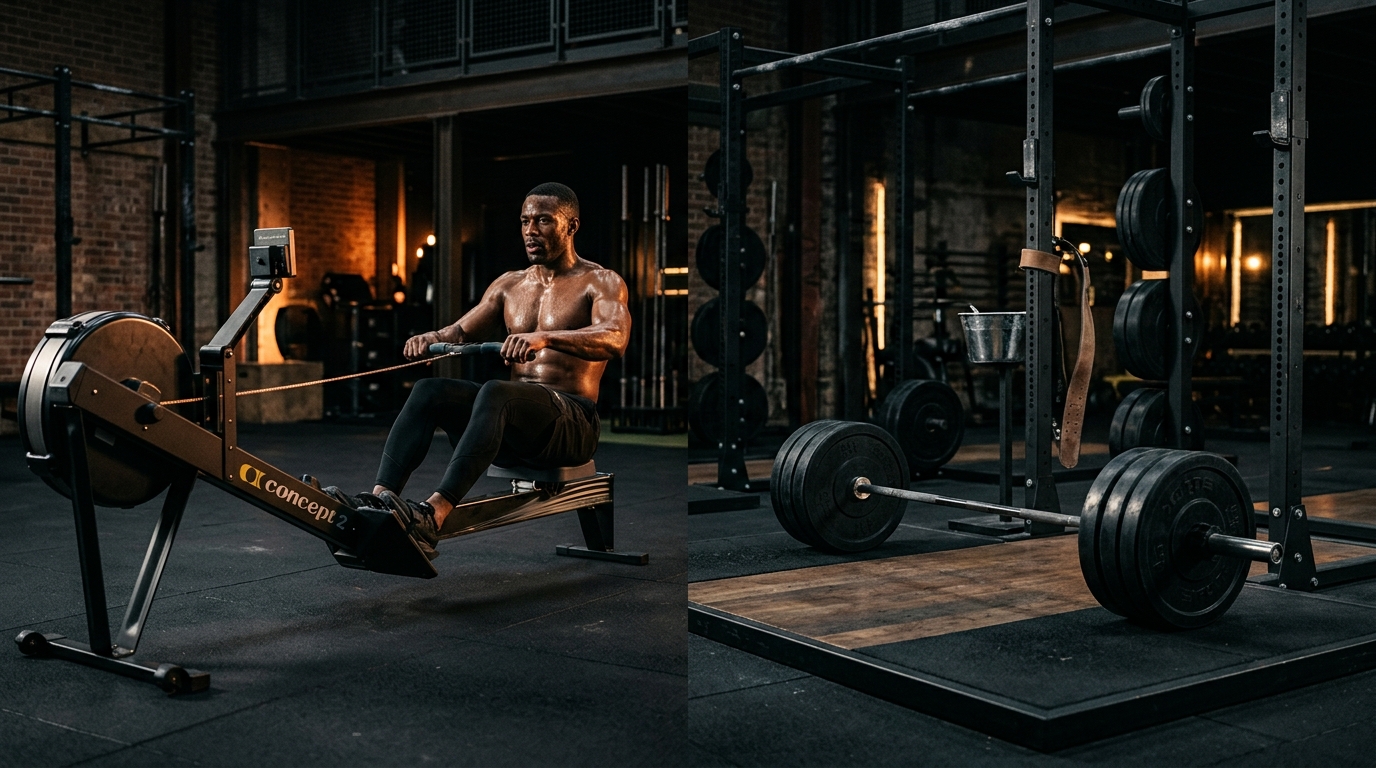
For decades, a myth has circulated in the fitness world that has terrified thousands: “Cardio eats muscle.” This idea has led many lifters to avoid even taking the stairs for fear of losing their hard-earned hypertrophy gains.
But the reality is quite different. If your goal is to be a complete athlete, have a healthy heart, and improve your recovery capacity between sets, cardio for weightlifters is not just an option—it’s a necessity. The key isn’t if you should do it, but how, when, and how much to do so that it boosts your results instead of stalling them.
In this article, we’re going to break down the science of concurrent training and give you the practical tools to integrate cardio into your routine without sacrificing a single ounce of muscle.
The Interference Effect: Fact or Fiction?
The scientific concept behind the fear of cardio is the interference effect. In theory, the cell signaling pathways for endurance (AMPK) and hypertrophy (mTOR) are antagonists. It was once said that activating one “turned off” the other.
However, recent studies have shown that this effect is much less dramatic than previously thought, especially in recreational athletes. Interference only becomes a real problem when cardio volume is excessive, intensity is too high, and recovery is not managed correctly. For most of us, the benefits of a solid aerobic base far outweigh any theoretical risk of muscle loss.
Why You Should Do Cardio Even If You Only Care About Weights
If you’re still not convinced, here are three heavy-hitting reasons not to skip your cardio:
- Better recovery between sets: An efficient cardiovascular system transports oxygen and nutrients to the muscles faster and removes metabolic waste more effectively. This means that instead of resting 3 minutes between sets of squats, you could be ready in 90 seconds, increasing your training density.
- Increased work capacity: If you’re gasping for air after a set of 8 deadlift reps, it’s not that your muscles failed; it’s that your heart couldn’t keep up. Cardio improves your “engine,” allowing you to train harder and for longer.
- Metabolic health and nutrient partitioning: Cardio improves insulin sensitivity. This means your body is more efficient at directing the carbohydrates you consume toward your muscles to be used as energy or stored as glycogen, rather than storing them as fat.
LISS vs. HIIT: Which is Better for a Bodybuilder?
When choosing the type of cardio for weightlifters, we usually divide it into two main categories:
LISS (Low Intensity Steady State)
This is low-intensity, steady-state cardio. Brisk walking on a treadmill with an incline is the classic example.
- Pros: Very easy to recover from, low joint impact, ideal for burning extra calories without fatiguing the central nervous system (CNS).
- Cons: Time-consuming (45-60 minutes).
HIIT (High Intensity Interval Training)
High-intensity interval training. Sprints on a stationary bike or prowler sled pushes.
- Pros: Very time-efficient (15-20 minutes), quickly improves VO2 max.
- Cons: Generates significant systemic fatigue and can interfere with leg recovery if not programmed carefully.
Gymary’s Verdict: For most lifters, LISS is the safest and most productive option. It allows you to burn calories and improve cardiovascular health without compromising your heavy strength sessions. HIIT is an excellent tool but should be used in moderation (1-2 times per week maximum).
How to Program Cardio Without Ruining Your Lifting Sessions
Logistics is where most people fail. Here are the golden rules for integrating both worlds:
1. Priority is the Iron
If your primary goal is strength or hypertrophy, you should always lift weights first. If you do intense cardio before weights, you’ll hit the platform with depleted glycogen and residual fatigue, limiting your capacity for progressive overload.
2. Separate Your Sessions
Ideally, separate cardio from weights by at least 6 to 24 hours. For example: weights in the afternoon and a brisk walk first thing in the morning. If you have to do both in the same session due to time constraints, do weights first and then cardio.
3. Avoid Impact
If you are a heavy lifter, running long distances on asphalt can be a recipe for joint disaster. Opt for low-impact activities such as:
- Incline walking.
- Cycling or AirBike.
- Elliptical.
- Swimming.
- Rowing (be careful not to overload the lower back before deadlift day).
4. Use Technology to Your Advantage
Keeping an accurate record is essential to avoid overstepping the mark. In the Gymary app, you can log not only your lifts but also your cardio sessions and see how they affect your overall performance. If you notice your squat numbers dropping since you started running 5k daily, the app will help you identify that pattern so you can adjust your volume immediately.
Comparative Table of Cardio Modalities
| Modality | Joint Impact | Systemic Fatigue | Time Required | Recommendation |
|---|---|---|---|---|
| Walking (LISS) | Very Low | Minimal | High (40+ min) | Daily (10k steps) |
| Stationary Bike | None | Low | Medium (30 min) | 2-3 times per week |
| Sprints (HIIT) | High | Very High | Low (15 min) | Once a week (away from leg day) |
| Swimming | None | Medium | Medium (30 min) | Excellent for active recovery |
Nutrition: The Factor That Decides If You Lose Muscle
The biggest danger of cardio for muscle mass isn’t the exercise itself, but an accidental caloric deficit. If you burn 300 extra calories doing cardio and don’t compensate with food, you could enter a deficit that is too aggressive, forcing your body to catabolize muscle tissue.
- Protein: Keep your intake high (0.8g - 1g per pound of body weight).
- Carbohydrates: Don’t fear them. They are the fuel for both your sprints and your 1RM sets.
- Monitoring: If your weight drops too quickly (more than 0.5% - 1% of your body weight per week), slightly increase calories or reduce cardio volume.
Weekly Structure Example (Hybrid)
For a lifter training weights 4 days a week (Upper/Lower split), a smart integration would look like this:
- Monday: Upper Body (Weights) + 20 min LISS at the end.
- Tuesday: Lower Body (Weights). No cardio to prioritize leg recovery.
- Wednesday: Active Recovery (45 min light walk or swimming).
- Thursday: Upper Body (Weights) + 15 min HIIT (Bike).
- Friday: Lower Body (Weights). No cardio.
- Saturday: Moderate LISS Cardio (45-60 min) or recreational activity.
- Sunday: Full Rest.
Conclusion
Cardio is not the enemy of strength; it is its strategic ally. A lifter with a good aerobic base is a lifter who can train harder, recover faster, and live longer to enjoy their gains.
The key lies in moderation and tactical intelligence. Don’t try to train for a marathon while chasing a powerlifting PR. Use cardio as a tool to improve your body composition and health, but always keep the focus on progressive overload in the gym.
Remember that every body is different. What works for an elite athlete might not be best for you. Use tools like Gymary to monitor your progress, note your sensations, and adjust your plan based on real data. At the end of the day, what doesn’t get measured, doesn’t get improved. Now, stop making excuses and go for that walk!
Want to track your workouts?
Download Gymary and start tracking your progress today.