From Zero to Your First Workout: How to Build a Gym Routine Without Losing Your Mind
From Zero to Your First Workout: How to Build a Gym Routine Without Losing Your Mind
You just signed up for the gym. Maybe you’d been thinking about it for months. Maybe someone convinced you. Either way, here you are — staring at a room full of machines you’ve never touched and people who look like they’ve been coming for decades.
The truth is, the hardest part is knowing where to start. Not because it’s complicated. But because there’s too much noise.
This article gets straight to the point: what sets, reps, and rest periods are, how to put them together, and how to build a chest day (or any other day) that you can repeat next week without improvising.
What Are Sets and Reps?
A rep (or repetition) is one complete movement. You push the bar up, you lower it — that’s one rep.
A set is a group of reps performed consecutively without stopping. You do bench press 10 times, rest, and you’ve completed one set.
So when a plan says 3x10, it means 3 sets of 10 reps. You do 10, rest, repeat, rest, and one more time. Done.
That’s all there is to it. The notation looks cryptic but it’s just multiplication.
How Many Reps Should I Do?
It depends on what you’re after:
| Goal | Rep Range | Notes |
|---|---|---|
| Strength | 1–5 reps | Heavy weight, long rest |
| Muscle growth (hypertrophy) | 6–12 reps | Most common for beginners |
| Muscular endurance | 13–20+ reps | Lighter weight, short rest |
If you’re just starting, 8–12 reps per set is a good starting point. It builds muscle, teaches you how each exercise feels, and lets you focus on technique before increasing weight.
Rest Between Sets: More Important Than It Seems
Almost everyone ignores it or treats it as optional. It’s not.
When you complete a set, your muscles deplete energy reserves (mainly ATP and phosphocreatine). Rest is the time they have to partially recover before the next set. If you don’t rest, the second set falls apart: you’ll do fewer reps, technique breaks down, and you’re not training as hard as you think.
General reference:
- Strength work (1–5 reps, heavy weight): Rest 3–5 minutes
- Hypertrophy work (8–12 reps): Rest 60–90 seconds
- Endurance work (15+ reps): Rest 30–60 seconds
For a beginner’s chest day, 60–90 seconds between sets works well. You can check your phone’s clock or count to 75 in your head.
What a Real Chest Day Looks Like for a Beginner
You don’t need eight exercises. Three or four movements are more than enough. Here’s an example:
Monday — Chest Day
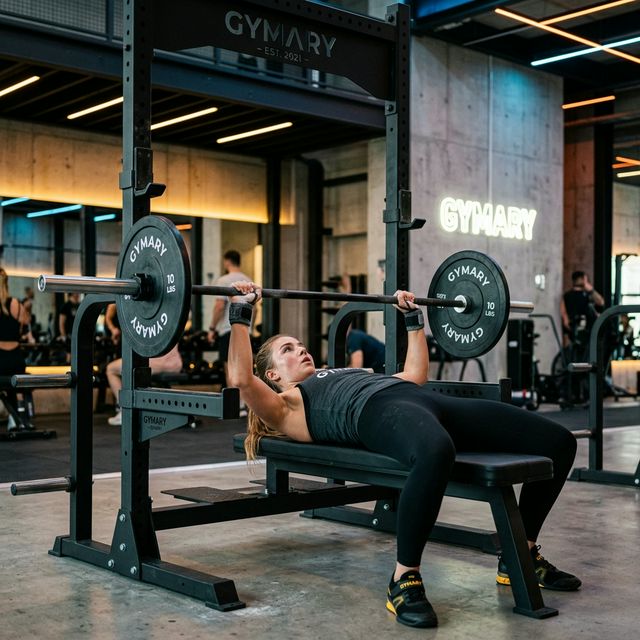
- Barbell Bench Press (Flat) — 3 sets x 10 reps | Rest: 90 seconds
- Incline Dumbbell Press — 3 sets x 10 reps | Rest: 90 seconds
- Cable Crossovers (or Pec Deck) — 3 sets x 12 reps | Rest: 60 seconds
- Dips or Push-Ups (to finish) — 2 sets x to failure | Rest: 60 seconds
Total sets: 11. Time in the gym: 45–55 minutes if you stay focused.
This works the chest from different angles (flat, incline, fly) without destroying you in the first week.
The Mistake Almost Everyone Makes When Starting Out
Two things beginners systematically do wrong:
1. Using too much weight from the start. If you can’t control the weight on the way down, it’s too heavy. Less weight, better technique, more muscle stimulus. The numbers on the bar don’t matter to anyone but you.
2. Making up a different workout every day. You need to repeat the same exercises for several weeks to improve at them. Random variety feels productive but is really just noise.
And this brings us to the second problem: keeping track of what you do.
Organize Your Routine with Gymary
Writing down your workout in notes or on paper works… until you can’t read your handwriting, or you can’t remember what weight you used last week, or Monday turns into “whatever I feel like” because there’s no plan.
That’s why Gymary’s Custom Routine Creator exists.
Here’s how to set up your chest day in minutes:
- Open Gymary and go to Routines
- Tap New Routine and name it — for example, “Monday — Chest”
- Add your exercises one by one: search for them by name and add them
- Configure the sets, reps, and rest time for each movement
- Save — it’s ready for every Monday
At the gym, open the routine, log the weight and reps for each set as you go, and Gymary records it. Next week, open the same routine and see exactly what you did last time. No guessing. No classic “did I do 50 or 55 kilos?”
In a few weeks, you’ll see the numbers creeping up. That’s progressive overload — and it’s the real mechanism that makes training work.
Quick Summary
- A rep is one movement. A set is a group of reps.
- To build muscle, aim for 3–4 sets of 8–12 reps.
- Actually rest 60–90 seconds between sets — not four minutes scrolling Instagram.
- Stick to 3–4 exercises per session. More isn’t better; consistency is what works.
- Log your workouts so you know what to beat next week.
The routine above isn’t perfect. Nothing you do in your first week will be. The goal is to show up, do the work, log it, and come back next Monday. In the beginning, that’s all there is.
Track your chest day and everything else with Gymary’s Custom Routines — available on iOS and Android.
Want to track your workouts?
Download Gymary and start tracking your progress today.