Leg Day: The Ultimate Guide to Building a Base of Steel
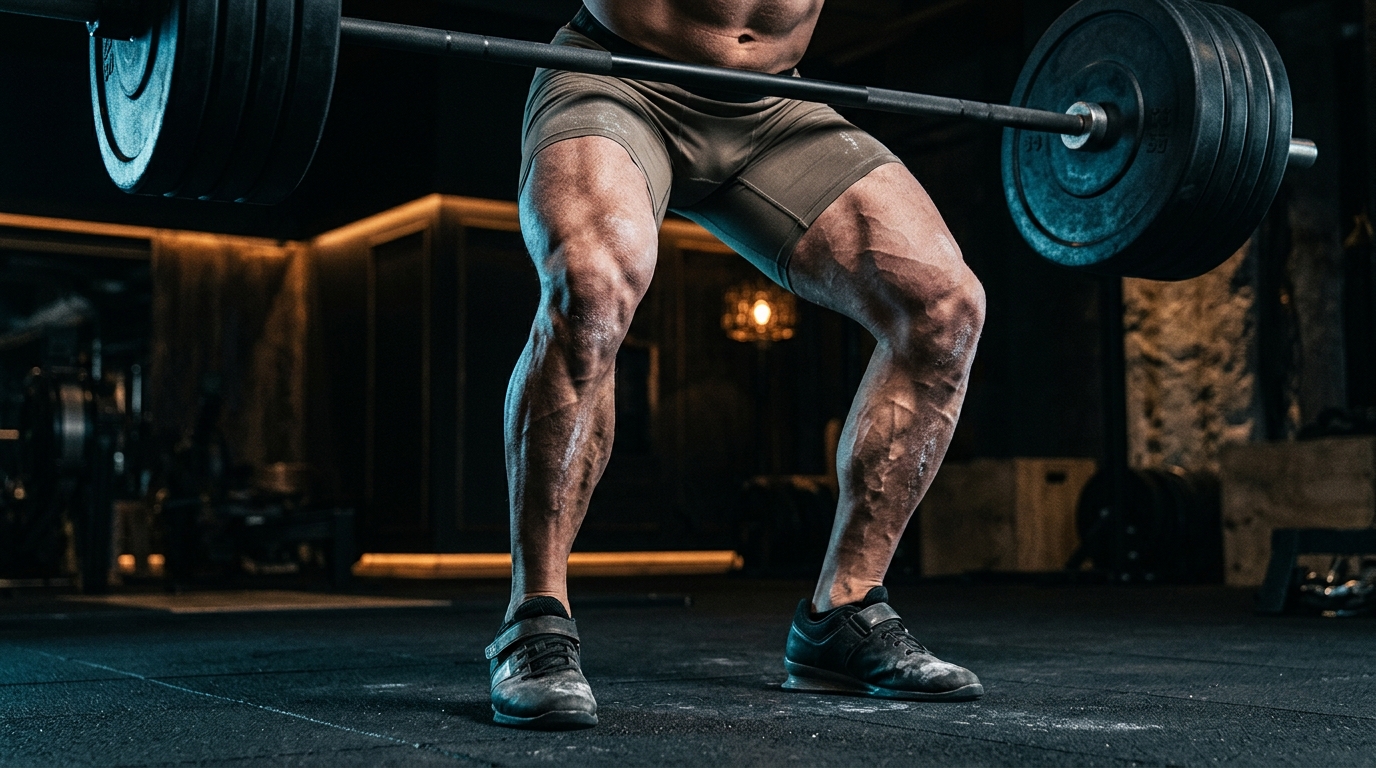
Let’s be honest: leg day is the most skipped workout in gyms worldwide. It’s hard, it’s exhausting, and unlike biceps, it doesn’t show off the same way in a tight t-shirt. However, if you are looking for a balanced physique, an accelerated metabolism, and real functional strength, you cannot afford to ignore half of your body.
Your legs house the largest and most powerful muscle groups. Training them doesn’t just give you a solid aesthetic foundation; it triggers a hormonal and metabolic response that benefits your entire body. In this guide, we’re going to break down how to attack the lower body with intelligence, science, and the necessary intensity.
Lower Body Anatomy: What You’re Training
To maximize your gains, you first need to understand what you’re moving. It’s not just about “doing legs,” but about working specific functions:
- Quadriceps (Quads): Composed of four muscles on the front of the thigh. Their main function is knee extension.
- Hamstrings: Located at the back. They are responsible for knee flexion and hip extension.
- Glutes: Your body’s engine. The gluteus maximus is the primary hip extensor, while the medius and minimus stabilize the pelvis.
- Adductors: The muscles of the inner thigh, crucial for stability and strength in compound exercises.
- Calves (Gastrocnemius and Soleus): Responsible for plantar flexion.
The Pillars of Leg Training
An effective leg workout doesn’t need 20 different machines. It needs intensity and progression in the fundamental movements.
1. The Knee-Dominant Pattern (Squats and Variations)
The squat is the king of leg exercises. However, there is no “single perfect squat” for everyone.
- Back Squat: The classic for moving maximum weight.
- Front Squat: Shifts the center of gravity forward, putting brutal emphasis on the quads and core.
- Leg Press: Excellent for taking the quads to failure without lower back fatigue being the limiting factor.
2. The Hip-Dominant Pattern (Hinge)
This is where you build the posterior chain (glutes and hamstrings).
- Romanian Deadlift (RDL): Fundamental for stretching and loading the hamstrings.
- Hip Thrust: The best exercise for isolating and overloading the gluteus maximus.
- Conventional Deadlift: Although it involves the whole body, it is a massive strength builder for the lower body.
3. Unilateral Work
This is where most people fail. Single-leg work corrects imbalances and improves stability.
- Bulgarian Split Squat: Probably the most hated and effective exercise in existence.
- Lunges: Dynamic or static, they are key for functionality.
Programming and Volume Strategy
For your legs to grow, they need volume and frequency. Training legs once a week (the classic Weider/Bro split) might work for beginners, but most intermediate athletes will see better results with a Frequency 2 approach (twice a week).
| Goal | Rep Range | Rest |
|---|---|---|
| Max Strength | 1 - 5 | 3-5 min |
| Hypertrophy (Growth) | 8 - 12 | 90-120 sec |
| Endurance/Pump | 15 - 20 | 60 sec |
Pro Tip: Don’t mix everything into one session if you don’t have the recovery capacity. You can split your leg days into “Quad Focus” (prioritizing squats and leg press) and “Hip/Hamstring Focus” (prioritizing RDLs and hip thrusts).
To avoid getting lost in your progression, you can use the Gymary app to log your weights. Seeing that you were able to move 2.5 kg more than last week on the Bulgarian split squat is the greatest motivation there is and the only real way to ensure progressive overload.
Common Mistakes Holding You Back
- Partial Range of Motion (ROM): Doing half-squats with heavy weight only serves to feed your ego and stress your knees. Go down until your thighs are at least parallel to the floor. Greater stretch under load is what triggers hypertrophy.
- Ignoring the Hamstrings: Many focus only on what they see in the mirror (quads). Weak hamstrings not only look bad, but they are a recipe for knee injuries (ACL).
- Inadequate Footwear: Don’t train legs in running shoes with air cushions. You need a stable, flat base (like Converse) or specific weightlifting shoes with an elevated heel.
- Not Tracking Progress: Legs are hard to train. If you don’t write down how much you lifted, it’s easy for your mind to trick you into staying in your comfort zone.
”Base of Steel” Sample Routine (Frequency 2)
Here is an example of how to structure two different sessions for a full week:
Session A: Anterior Focus (Quad dominant)
- Barbell Squat: 3 sets x 6-8 reps (Heavy, RPE 8).
- Leg Press: 3 sets x 12-15 reps (Focus on eccentric control).
- Bulgarian Split Squat: 3 sets x 10 reps per leg.
- Leg Extensions: 2 sets x 15-20 reps (To technical failure).
- Standing Calf Raises: 4 sets x 12 reps (2-sec pause at the stretch).
Session B: Posterior Focus (Hamstring & Glute dominant)
- Romanian Deadlift: 3 sets x 8-10 reps (Feel the stretch).
- Hip Thrust: 3 sets x 10-12 reps (Hold the contraction at the top for 1 sec).
- Lying or Seated Leg Curl: 3 sets x 12-15 reps.
- Reverse Lunges: 3 sets x 12 total reps.
- Seated Calf Raises: 4 sets x 15-20 reps.
Nutrition and Recovery for Leg Day
Leg day is the most glycogen-demanding day. It’s not the best day for a strict ketogenic diet or an aggressive caloric deficit if you intend to perform.
- Carbohydrates: Make sure to have a good load of complex carbs before training for energy, and simple carbs after to replenish.
- Protein: Muscle damage in the legs is massive. Don’t skimp on your post-workout protein intake.
- Sleep: If you’ve truly trained legs, your central nervous system (CNS) will be exhausted. Sleep at least 8 hours to allow muscle repair to occur.
Conclusion
Building powerful legs has no magic secrets: it requires the will to face the pain and the discipline to follow a structured plan. Don’t look for exotic exercises every week; look to become absurdly strong in the basics.
Remember that progress is visual, but above all, it is numerical. Keep a strict record of your workouts in Gymary, ensure that each week you are doing a little more (whether it’s an extra rep or an extra kilo on the bar), and results will be inevitable.
Stop skipping leg day. Your future self will thank you when you have the power, stability, and aesthetics of a complete athlete. See you at the power rack!
Want to track your workouts?
Download Gymary and start tracking your progress today.