Progressive Overload: The Secret to Never Stalling at the Gym
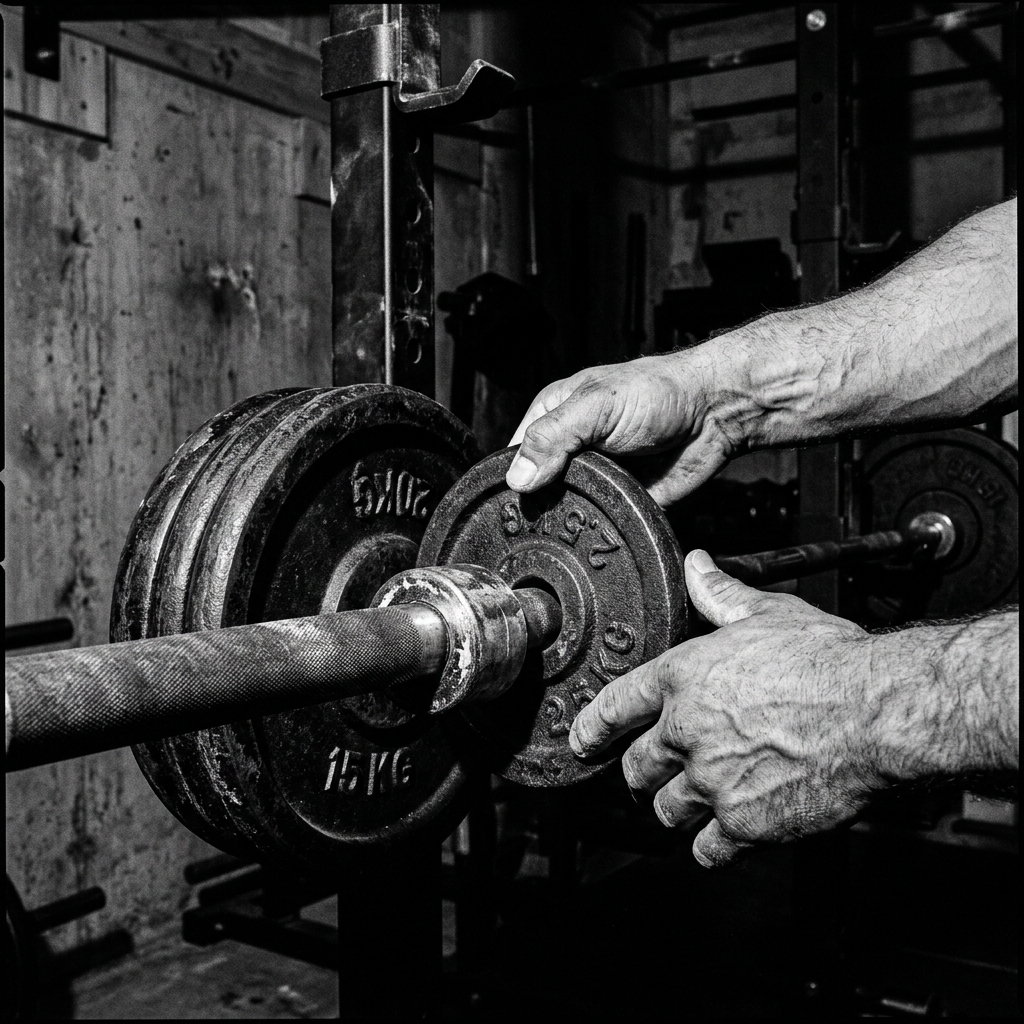
You’ve surely seen that person at the gym who’s been lifting exactly the same 60 kilos on bench press for years. They have the same physique as day one, do the same reps with the same technique, and rest the same time between sets. That person is living proof that training hard is not the same as training smart.
If your goal is to build muscle or get stronger, there’s a universal law you can’t ignore: progressive overload. Without it, your body has no physiological reason to change. In this article, we’ll break down what it is, why it’s vital, and how you can start applying it today so every gym session counts.
What Exactly Is Progressive Overload?
The human body is an incredibly efficient survival machine. Its only goal is to maintain homeostasis (internal balance). When you go to the gym and lift weights, you’re disrupting that balance. You’re subjecting your muscles, tendons, and nervous system to stress they’re not used to.
In response, your body adapts: it repairs muscle fibers to make them bigger and optimizes the nervous system to be more efficient. The problem is that once the body has adapted to a specific effort, that effort stops being a challenge. If you keep lifting the same weight for the same number of reps, your body will say: “I’m strong enough for this now, I don’t need to spend extra energy building more muscle.”
Progressive overload is the practice of gradually increasing the stress applied to the body during training in a systematic way. It’s the process of making your workouts progressively harder over time.
The 5 Main Ways to Apply Progressive Overload
Many beginners make the mistake of thinking progressive overload only means “adding more plates to the bar.” While increasing weight is the most obvious method, it’s not the only one, and often not the smartest in the short term.
Here are the five main tools in your toolbox:
1. Increase Resistance (Weight)
This is the most classic method. If last week you squatted 80 kg, this week you try 82.5 kg. It’s the most direct way to gain absolute strength, but it’s also the first to run out. You can’t add 2 kg to the bar every week forever, or in three years you’d be lifting more than an Olympic athlete.
2. Increase Volume (Reps and Sets)
If you can’t increase the weight, do more work with the same weight.
- Reps: If you were doing 3 sets of 8 reps with 50 kg, try 3 sets of 10 with that same weight.
- Sets: Instead of 3 sets of an exercise, do 4. You’re increasing total work volume, forcing the muscle to adapt to greater fatigue.
3. Improve Technique Quality and Range of Motion (ROM)
This is the most underrated method. If you do bench press only lowering halfway to your chest, and then three weeks later you lower the bar until it touches your sternum with the same weight, you’ve progressed. You’ve increased the mechanical work. Improving technique, controlling the eccentric (lowering) phase more, or eliminating momentum are brutal forms of progressive overload.
4. Reduce Rest Times
If you can do the same workout as last week but resting 60 seconds instead of 90 between sets, your training density has increased. You’re forcing your body to recover faster, improving metabolic capacity and blood flow efficiency.
5. Increase Training Frequency
This means going from training a muscle group once a week to two or three times. By the end of the month, you’ll have accumulated much more quality stimulus, translating to greater long-term gains.
Why You Need to Track Your Workouts
This is where most people fail. The human brain is terrible at remembering exact numbers from seven days ago. Was it 8 reps with 40 kg or 10 reps with 38 kg? If you go to the gym to “see how you feel” today, you’re not training, you’re exercising. There’s a huge difference.
To truly apply progressive overload, you need data. You need to know exactly what you did in your last session to try to beat it in the current one. This is where Gymary comes in. By using the app to log every set, every weight, and every rep, you eliminate guesswork. Gymary lets you visualize your progress through charts and historical logs, giving you that visual confirmation that you are, indeed, getting stronger. If you see your numbers in the app staying flat for a month, you have a clear signal that something in your programming needs to change.
The “Double Progression” Strategy
For those who aren’t elite athletes, the best way to apply progressive overload is through double progression. It’s a simple and safe method to avoid plateaus and injuries.
It works by establishing a rep range (for example, 8 to 12).
- You choose a weight with which you can do 8 reps with good technique, but struggle to get to the 9th.
- You keep that weight in subsequent sessions until you can do 3 sets of 12 reps solidly.
- Only when you reach the upper limit of the range (12 reps), you increase the weight slightly (2-5%) and start back at 8 reps.
Practical Example of Double Progression on Overhead Press:
| Week | Weight | Sets x Reps | Result |
|---|---|---|---|
| Week 1 | 30 kg | 3 x 8, 8, 8 | Goal met (minimum) |
| Week 2 | 30 kg | 3 x 10, 9, 8 | Progress in reps |
| Week 3 | 30 kg | 3 x 12, 11, 10 | Almost at the limit |
| Week 4 | 30 kg | 3 x 12, 12, 12 | Goal achieved! |
| Week 5 | 32.5 kg | 3 x 8, 8, 8 | Weight increase, back to start |
The Dangers of Forcing Overload (Ego Lifting)
Progressive overload is not an invitation to sacrifice proper form to add plates. “Ego lifting” is the fastest road to the physiotherapist’s office. If you have to swing your whole body like a pendulum to lift 5 more kg on a bicep curl, you’re not applying progressive overload to the bicep; you’re applying overload to your lower back and joints.
Remember: Weight is a means, not the end. The goal is to fatigue the muscle tissue in a controlled way to generate a response. If technique degrades significantly, that weight increase doesn’t count as real progress.
The Importance of Deloading
You can’t progress linearly forever. The body accumulates fatigue not only in the muscles, but also in the central nervous system and connective tissues (ligaments and tendons).
After 4 to 8 weeks of intense progressive overload, you’ll likely start feeling tired, the weight will feel heavier than normal, or you’ll lose motivation. That’s the time for a deload week. During this week, cut the weight in half or significantly reduce the number of sets. This allows your body to fully recover and “consolidate” the adaptations, preparing you for a new block of even stronger progress.
Conclusion
Progressive overload is the engine that drives physical change. It doesn’t matter what diet you follow or what supplements you take; if you’re not challenging your body to do more than it did last week, the results will stop.
Don’t obsess over increasing weight every session. Sometimes doing one more rep with the same weight or controlling the bar’s descent better is an equally valid victory. What matters is consistency and logging. Open Gymary, log what you did today, and make sure that the next time you step foot in the gym, your future self is a little more capable than your present self.
Real progress doesn’t happen by accident; it happens by design. Go crush it!
Want to track your workouts?
Download Gymary and start tracking your progress today.