Beyond the Six-Pack: The Ultimate Guide to Core Training
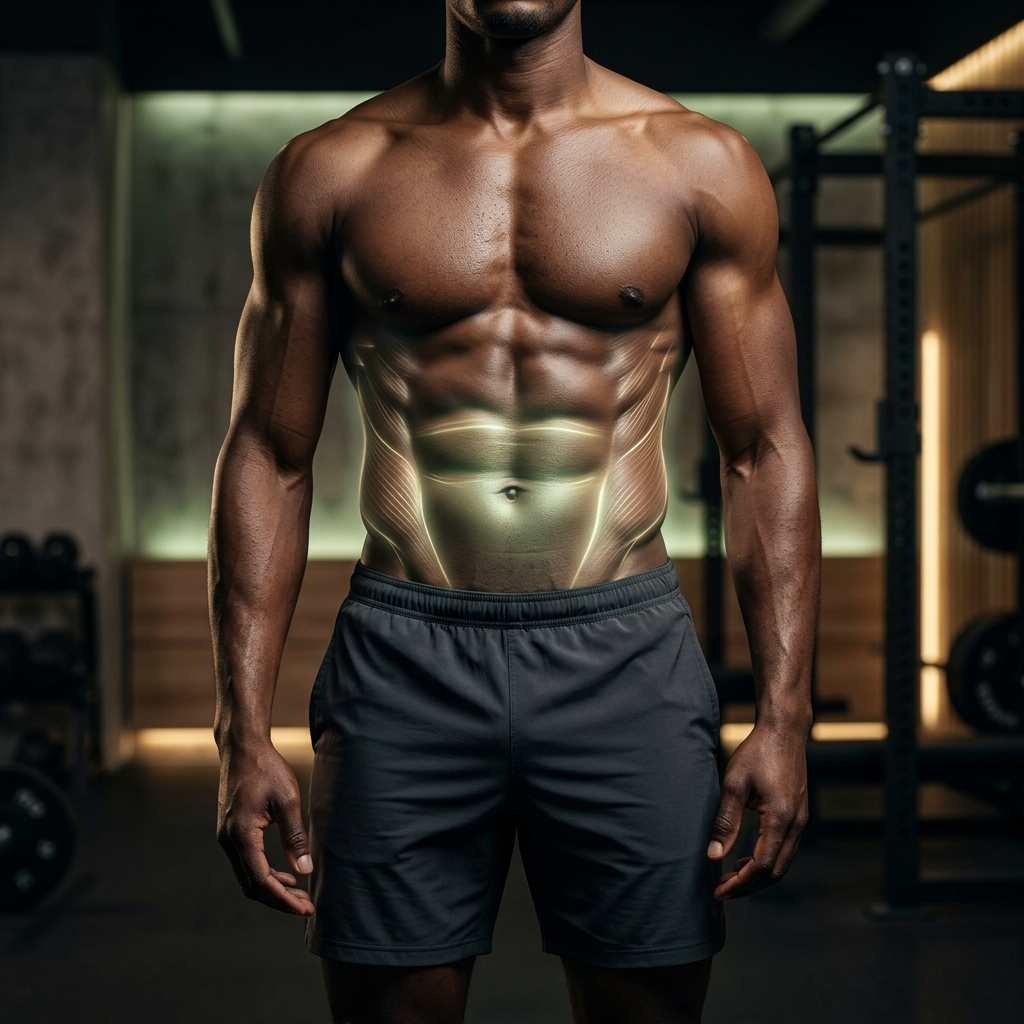
If you ask most people at the gym what the “core” is, they’ll likely point to their front abs and talk about etching out that famous “six-pack.” If you’re a regular Gymary reader, you already know we don’t just stay on the surface. The core is the epicenter of your strength, the bridge connecting your upper and lower body, and the reason you don’t fold like an accordion when you have 225 lbs on your back during a squat.
Having visible abs is a matter of body fat percentage. Having a strong core is a matter of performance, health, and longevity. In this article, we’re going to break down what the core really is, why traditional crunches are the least important piece of the puzzle, and how to train it like a pro athlete.
What is the “Core” Really?
The core isn’t a single muscle; it’s a functional complex of nearly 30 muscles that stabilize the spine and pelvis. Imagine your torso as a pressure cylinder. If that cylinder is weak at any point, pressure leaks, stability is lost, and the risk of injury skyrockets.
The Key Players:
| Muscle | Main Function |
|---|---|
| Rectus Abdominis | Spinal flexion (the six-pack muscle). |
| Transversus Abdominis | Your natural “belt.” Compresses viscera and provides internal stability. |
| Obliques (Internal/External) | Rotation and lateral stability. |
| Erector Spinae | Extension and lower back support. |
| Multifidus | Small muscles that stabilize each vertebra. |
| Diaphragm & Pelvic Floor | The roof and base of the pressure cylinder. |
The 4 Core Stabilization Functions
To train your core effectively, we must stop thinking about “moving” and start thinking about “resisting movement.” The true function of the core isn’t to create movement (like a bicep does when flexing), but to prevent external forces from compromising your spine.
This is where the four pillars of modern core training come in:
1. Anti-Extension
The goal is to prevent the lower back from arching excessively (hyperextension). This is vital when performing an overhead press or when lowering your legs during floor exercises.
- Key Exercises: Plank, Deadbug, Ab-Wheel Rollouts.
2. Anti-Rotation
The core must be able to resist forces trying to twist your torso. This transfers power incredibly well in contact sports or throwing movements.
- Key Exercises: Pallof Press, Plank Shoulder Taps (keeping the hips from swaying).
3. Anti-Lateral Flexion
Resisting the torso from bending to the sides. Think about when you carry a heavy grocery bag in just one hand.
- Key Exercises: Suitcase Carry (single-arm farmer’s walk), Side Plank.
4. Anti-Flexion
Preventing your spine from rounding forward under a load. This is what keeps your back safe during a heavy deadlift.
- Key Exercises: Deadlift, Squat, Good Mornings, Rack Pulls.
Why Crunches Aren’t Enough
Don’t get me wrong: spinal flexion (the crunching motion) has its place if you’re looking for pure hypertrophy of the rectus abdominis. However, basing your entire core training only on crunches is like trying to build a race car and only worrying about the paint job.
The problem with traditional crunches is that they place cyclic stress on the intervertebral discs without teaching the core to do its primary job: stabilizing. Furthermore, most people over-engage their hip flexors, which ends up pulling on the lumbar region and causing that common back pain after “doing abs.”
How to Program Core Training
The core, being a stabilizing muscle group with a high proportion of slow-twitch fibers, responds well to frequency but also requires progressive overload. A 2-minute plank is useless if your technique is mediocre.
In the Gymary app, you can log specific core exercises and track how, as you increase time under tension or resistance in a Pallof Press, your main lifts (like bench press or squats) become more stable. The app allows you to see that direct correlation: a strong core equals more weight on the bar.
Sample Session Structure:
For real results, include one exercise from each “anti-movement” category in your weekly routine. You don’t need to dedicate an hour to it; 10-15 minutes at the end of your session is plenty.
Sample Routine A (Push Day):
- Deadbug: 3 sets of 10 reps per side (Total control, lower back glued to the floor).
- Pallof Press: 3 sets of 12 reps per side (Holding for 2 seconds at full extension).
Sample Routine B (Pull Day):
- Side Plank: 3 sets of 45 seconds per side (Hips high and aligned).
- Suitcase Carry: 3 sets of 30 meters per arm (Walking tall without leaning).
The Role of Breathing (Bracing)
You can have the core of an Olympian, but if you don’t know how to breathe, it’s all for nothing. Abdominal bracing is the technique of creating intra-abdominal pressure.
- Inhale: Not into your chest, but into your abdomen (“inflate” your belly).
- Expand: Imagine someone is about to punch you; push your muscles outward 360 degrees.
- Brace: Maintain that rigidity while executing the movement.
This technique protects your spine more than any weightlifting belt. In fact, a belt only serves to give you something to push your abdominal muscles against.
Common Mistakes Holding Your Progress Back
- Arching your back during planks: If your lower back hurts during planks, your core has “turned off,” and you’re hanging off your ligaments. Tuck your pelvis (posterior pelvic tilt), squeeze your glutes, and maintain a straight line.
- Not using weights: The core is a muscle. If you do 100 reps of something without weight, you’re working on local muscular endurance, not strength. Add dumbbells, cables, or resistance bands.
- Holding your breath incorrectly: There is a difference between bracing and simply suffocating. Learn to “breathe behind the shield” (maintaining abdominal tension while taking short, controlled breaths).
Core Exercise Progression Table
If you’re getting bored of the same old moves, use this table to level up:
| Level | Anti-Extension | Anti-Rotation | Anti-Lateral Flexion |
|---|---|---|---|
| Beginner | Plank (Front Plank) | Static Pallof Press | Knee-supported Side Plank |
| Intermediate | Weighted Deadbug | Pallof Press with steps | Feet-together Side Plank |
| Advanced | Ab-Wheel Rollout | Cable Woodchoppers | Heavy Suitcase Carry |
| Elite | Dragon Flags | Landmine Rotations | Side Plank with Hip Abduction |
The Connection with Heavy Lifting
Why do the world’s best powerlifters have such thick torsos? Because to move 700 lbs, you need a bulletproof spine. If your squat plateaus and you feel yourself “buckling” forward, the problem is rarely your legs; it’s usually your core failing to transmit force.
Training the core functionally will provide an immediate transfer to your daily life. Lifting your kids, carrying groceries, or spending hours sitting at a computer will be much less taxing if your natural “weight belt” is active and strong.
Conclusion
Stop obsessing over exercises that just “burn” or make your abs sting. That burn is often just lactic acid buildup in the hip flexors or superficial fatigue. True core training is silent, requires brutal focus on posture, and often involves not moving at all.
Use tools like Gymary to track not just your biceps, but also your plank times and the loads in your anti-rotation exercises. Consistency here is the key to a healthy back and elite performance.
Remember: Abs are seen in the kitchen, but the core is built with iron, stability, and plenty of patience. Let’s get to work!
Want to track your workouts?
Download Gymary and start tracking your progress today.