Compound vs. Isolation Exercises: Maximize Your Gains with the Right Strategy
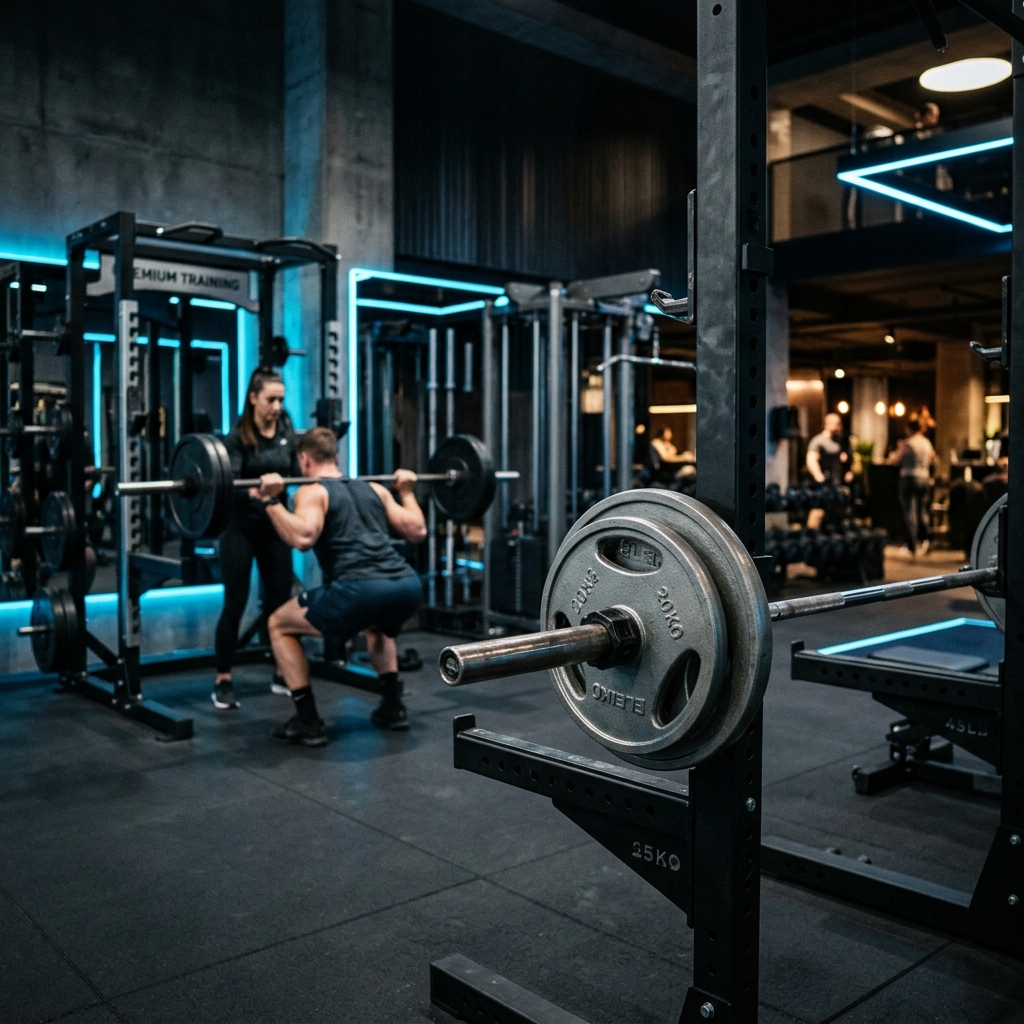
In the fitness world, it seems there are always two opposing sides. On one hand, you have the “old school” purists who swear that all you need are squats, bench presses, and deadlifts to build an imposing physique. On the other, there are those who spend hours on cable machines and pulleys chasing the perfect “pump” and maximum definition.
If you’re here, it’s because you want to stop wasting time and finally understand how to use compound and isolation exercises to transform your body. It’s not about choosing one or the other, but knowing when, how, and why to integrate them into your programming.
Let’s get straight to the point.
What are Compound Exercises?
Compound exercises, also known as multi-joint movements, are those that involve multiple joints and several muscle groups working simultaneously.
Think of it like an orchestra: the bench press doesn’t just work your chest; your shoulders (anterior deltoids) and your triceps have to work hard to move the load.
The benefits of compound movements:
- Time efficiency: You work more muscle in less time. If you have 45 minutes to train, five sets of squats will give you a much better return on investment than ten sets of leg extensions.
- Massive progressive overload: It’s much easier to add 5 lbs to a squat every week than to add them to a bicep curl. These exercises allow you to move heavy loads, which is fundamental for strength gains and bone density.
- Hormonal response: Moving heavy loads involves a greater amount of muscle tissue, which can naturally stimulate a higher testosterone and growth hormone response.
- Functional transfer: Bending down to pick up something heavy (deadlift) or pushing an object (press) are movement patterns we use in real life.
What are Isolation Exercises?
Isolation exercises (single-joint) focus on a single joint and, therefore, one specific muscle group. The goal here isn’t to move as much weight as possible, but to fatigue a specific muscle without others jumping in to help.
The benefits of isolation:
- Correcting asymmetries: If you notice your right arm is larger than your left, dumbbell isolation is your best tool.
- Mind-muscle connection: They are ideal for learning to “feel” the muscle you are working, which is vital for hypertrophy.
- Lower systemic fatigue: You can take a muscle to absolute failure on a triceps extension machine without taxing your central nervous system the same way a heavy set of overhead presses would.
- Aesthetics and detail: They help provide that “complete” look to muscles that sometimes lag behind in big lifts, such as the lateral deltoids or the long head of the triceps.
Direct Comparison: Which One to Choose?
There isn’t an absolute winner, but there is a proper context for each. Here is a comparison table so you can see the key differences:
| Feature | Compound Exercises | Isolation Exercises |
|---|---|---|
| Joints involved | Two or more | One |
| Load used | High / Very high | Moderate / Low |
| Growth potential | Global (Strength & Mass) | Localized (Detail & Symmetry) |
| Fatigue generated | High (Systemic) | Low/Moderate (Local) |
| Injury risk | Higher (if technique fails) | Lower (guided movements) |
| Examples | Squat, Pull-ups, Bench Press | Bicep curl, Lateral raises |
The Science of Programming: Order Matters
If you walk into the gym and the first thing you do is three sets of triceps extensions to failure, your triceps will be exhausted by the time you get to the bench press. The result? You won’t be able to move the weight necessary to effectively stimulate your chest.
The Golden Rule: Always start with the heaviest compound exercises and finish with isolation work.
When you log your workouts in Gymary, you’ll see that well-structured routines always prioritize the “Big Lifts” at the start. This is because your energy and mental focus are at their peak when you begin the session. Using the app to monitor how your numbers increase on these exercises is the number one indicator that you are gaining real muscle.
Recommended session structure:
- Dynamic Warm-up: 5-10 minutes (essential for preparing the joints).
- Main Movement (Heavy Compound): 5-8 rep range. (e.g., Deadlift).
- Secondary Movement (Moderate Compound): 8-12 rep range. (e.g., Barbell Row).
- Isolation Accessories: 12-15+ rep range seeking metabolic stress. (e.g., Face pulls).
When to Prioritize Isolation?
While compound movements are the foundation, there are situations where isolation takes center stage:
- During a cutting phase: When calories are low, isolation exercises allow you to maintain muscle stimulus without frying your nervous system.
- Injury rehabilitation: If you have lower back issues that prevent you from doing heavy squats, isolation machines allow you to keep training your legs safely.
- Focusing on weak points: If your pecs dominate over your shoulders, adding more lateral raises and front raises is necessary to balance your aesthetics.
Practical Examples by Muscle Group
To clear up any doubts, here is how the most common gym exercises are categorized:
Lower Body
- Compound: Squat (barbell, goblet, front), Leg press, Lunges, Romanian deadlift.
- Isolation: Leg extensions, Leg curls (seated or lying), Calf raises, Adductor machine.
Upper Body (Push)
- Compound: Bench press, Military press, Dips.
- Isolation: Dumbbell flyes, Cable triceps extensions, Lateral raises.
Upper Body (Pull)
- Compound: Pull-ups, Barbell row, Dumbbell row, Lat pulldown.
- Isolation: Bicep curls, Face pulls, Straight-arm pulldown (for lats).
How to Apply This Today
If you feel like your progress has stalled, review your exercise selection. A common mistake is doing too much isolation. Many beginners spend 80% of their time doing biceps and triceps, when they should be spending 80% of their time mastering the squat and pull-ups.
Follow this strategy:
- Master the technique of 4-5 key compound exercises. Don’t move to maximum loads until your form is perfect.
- Use Gymary to track your weights. If your bench press has gone up by 10 lbs in the last month, you’re on the right track. Isolation is “dessert,” but compounds are the main course.
- Don’t ignore isolation for small muscle groups. Shoulders and arms respond incredibly well to high reps and the accumulated volume of isolation exercises.
Conclusion
There is no war between compound and isolation exercises. They are different tools in your fitness toolbox. Compound exercises build the house (the structure, strength, and base mass), while isolation exercises provide the finishing touches (symmetry, detail, and correcting imbalances).
To get the best results, build your routine around the big lifts and use isolation to finish the job and sculpt the areas that larger movements don’t fully exhaust.
Remember: consistency and progressive overload in both types of exercises are what will ultimately lead you to your goals. Let’s get to work!
Want to track your workouts?
Download Gymary and start tracking your progress today.