Intensity Techniques: How to Break Your Limits and Maximize Hypertrophy
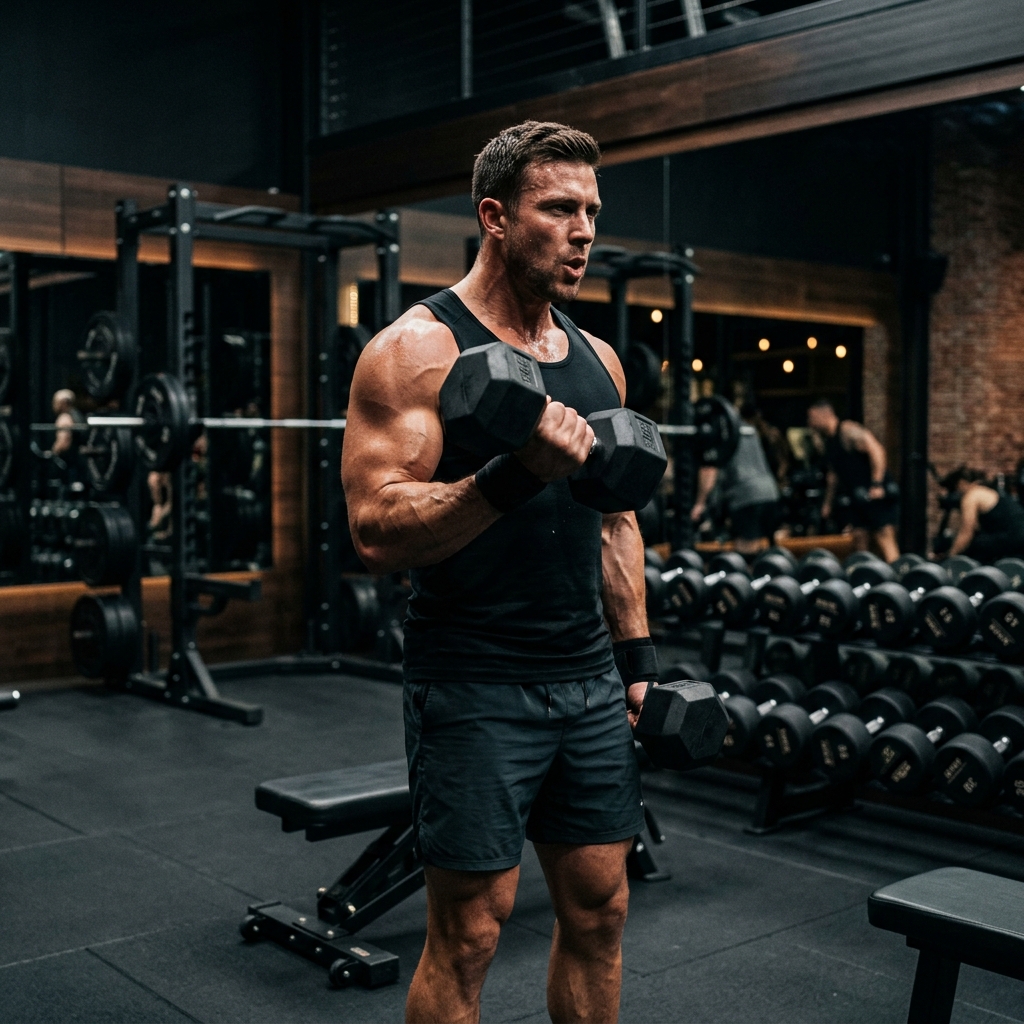
It’s happened to you for sure: you’ve been following the same routine for months, logging your weights and pushing hard, but suddenly progress stops. The weights won’t go up, the mirror shows no changes, and that initial motivation starts to fade. Welcome to the “plateau,” a phase every athlete goes through sooner or later.
When conventional progressive overload (adding more weight to the bar) becomes hard to maintain, it’s time to bring out the big guns. This is where intensity techniques come in. They’re not magic tricks, but strategic tools designed to increase metabolic stress and recruit motor units that usually stay “asleep” during a conventional set.
In this article, we’ll break down the most effective techniques, how to apply them without injury, and why they’re the push your muscles need.
What Is Intensity Really About in the Gym?
Before diving in, let’s clarify terms. In exercise science, “intensity” usually refers to the percentage of your 1RM (the maximum weight you can lift once). However, in day-to-day gym talk, we’re referring to effort intensity: how close you are to actual muscular failure.
Intensity techniques allow us to go one step beyond conventional failure or accumulate more work volume in less time. They’re training “amplifiers.”
1. Supersets: Efficiency and Pump
The superset is the queen of intensity techniques for its versatility. It consists of performing two exercises back to back without rest between them.
There are two main types:
- Antagonist Supersets: You combine two opposing muscle groups (e.g., Bench Press + Barbell Row). This is an excellent way to save time without sacrificing strength, since while one muscle works, the other actively rests.
- Agonist Supersets (or Bi-sets): You attack the same muscle with two different exercises (e.g., Overhead Press + Lateral Raises). The goal here is accumulated fatigue and extreme metabolic stress.
Why do they work? They increase training density (you do more work in less time) and generate a brutal muscle pump (hyperemia), which helps stretch the muscle fascia and deliver nutrients to the area.
2. Drop Sets: Emptying the Tank
If you could only choose one technique for size, it would probably be the Drop Set.
The mechanics are simple:
- Perform a set with a weight that takes you to failure (or very close) in, say, 10 reps.
- Immediately after, reduce the weight by 20-30%.
- Continue doing reps until you reach failure again.
- You can repeat this once or twice more (Triple Drop Set).
The secret of drop sets is that even though your muscle fibers can no longer move the initial heavy weight, they still have energy to move a lighter load. By lowering the weight, you “trick” the nervous system into continuing to recruit fibers, taking the muscle to a state of absolute fatigue that a normal set couldn’t reach.
3. Rest-Pause: The Science of Effective Reps
This is possibly the favorite technique of old-school bodybuilders and modern science enthusiasts. It’s based on the concept of “effective reps.” The first 5 reps of a 12-rep set are usually “easy”; the ones that truly stimulate growth are the last 3 or 4.
How to do it:
- Choose a weight for 8-10 reps. Do the set to technical failure.
- Set the weight down and rest exactly 15 to 20 seconds.
- Pick up the weight again and squeeze out as many reps as you can (usually 2 to 4).
- Rest another 15-20 seconds and do one last effort.
With Rest-Pause, you turn a normal set into a sequence of “micro-sets” where almost all the reps are high-intensity. It’s an incredible way to accumulate high-quality volume without spending two hours in the gym.
4. Myo-Reps: The Optimized Version
Myo-reps are a Rest-Pause variant popularized by Borge Fagerli. They focus on maximizing fast-twitch fiber recruitment through very short rests.
- Do an “activation set” (12-15 reps).
- Rest for 5 deep breaths.
- Do sets of 3 to 5 reps with the same weight, resting 5 breaths between them, until you can’t complete the small set’s rep count.
Intensity Techniques Comparison
| Technique | Main Goal | Fatigue Level | Ideal for… |
|---|---|---|---|
| Supersets | Time saving / Pump | Moderate | Full body / Arms |
| Drop Sets | Metabolic Stress | High | Machines and Isolation |
| Rest-Pause | Fiber Recruitment | Very High | Compound exercises / Plateaus |
| Myo-Reps | Time Efficiency | High | Isolation / Travel |
The Danger of “False Intensity”
A common mistake is thinking more is always better. If you add drop sets to every exercise in your routine, your central nervous system will collapse in less than two weeks. Intensity is a tool, not a constant lifestyle.
To avoid overtraining:
- Use these techniques preferably on isolation exercises: Doing a drop set on heavy squats is a recipe for technical disaster and injury. Better use them on Leg Extensions or Bicep Curls.
- Limit them to the last set: Don’t do rest-pause on all 4 sets of an exercise. Do your normal sets and “finish off” the muscle on the last one.
- Track everything: It’s vital to know if a technique is helping you progress or just leaving you exhausted with no real benefits.
This is where Gymary becomes your best ally. Logging a normal set is easy, but keeping track of a triple drop set or exact rest times on a Myo-reps session can be mental chaos with paper and pencil. In the Gymary app, you can configure your routines to include these variations organically, letting you see at a glance if your total training volume is increasing or if you need to schedule a deload week. The key to success isn’t just training hard, but training smart and data-driven.
When Should You Start Using Them?
If you’re a total beginner (less than 6-12 months of training), you don’t need them. Your body will respond to almost any stimulus, and the best thing you can do is focus on nailing the technique of basic movements and increasing weight linearly.
However, if you’re already intermediate or advanced and notice your numbers have flattened, introduce one of these techniques on a single muscle group per week. Observe how your body responds, how your recovery is, and adjust from there.
Conclusion: Train with Intention
Intensity techniques like drop sets and supersets are the “spice” of your training. In the right dose, they make the dish incredible and effective; in excess, they ruin the meal.
Remember that the foundation of muscle growth will always be consistency, good nutrition, and rest. Use these tools to break through glass ceilings, to add variety to your gym days, and to remind your muscles that you’re in control.
Are you ready for your next set? Open your routine in Gymary, select that exercise that’s been resisting you, and get ready for a drop set that will make you question your life choices — but will give you the results you’re after. Go crush it!
Want to track your workouts?
Download Gymary and start tracking your progress today.